SELAMAT DATANG


Minggu, 10 Juni 2012

LAKTAM

This issue of Enamine Product Focus highlights Lactams, cyclic amide building blocks. There are numerous examples of Lactams usage in drug discovery, e.g., β-lactam based antibiotics, oral anticoagulant Rivaroxaban, and anticonvulsant Levetiracetam.

                                       
Rivaroxaban, 2008                                                           Levetiracetam, 2000

The specific features of Lactam building blocks that are of advantage to drug design are summarized in the chart below.
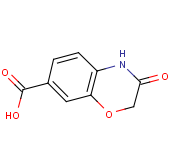
Enamine’s Lactam building block collection is represented by many useful scaffolds, for example, piperidones, piperazinones, (thio)morpholiones, pyrrolidones, and their benzo-fused analogues. From combinatorial chemistry standpoint especially interesting lactams in our collection are those bearing additional functionalities, such as carboxyl, chlorosulfonyl, and amino-groups.
                                                                                     
Piperidones                                                 Piperazinones                                                   Morpholinones
       

Thiomorpholinones               Pyrrolidones                              Dihydroquinoxalinones

The procedures developed for the synthesis of our Lactams allow preparation of highly diverse building blocks on 1–10 g scale. In addition we offer synthesis of novel compounds of the requested structure in 4–8 weeks. Scale-up to 1 kg quantity is performed upon request.

Amines
                EN300-14698
            EN400-15942
              EN300-12374
             EN400-15247
                EN300-04190
               EN300-05878
             EN300-27804
              EN300-35705
               EN300-36103
              EN300-14296
           EN300-14821
             EN300-35764
Sulfochlorides
            EN300-13073
           EN300-13555
               EN300-14981
Carboxylic acids
        EN300-42819
             EN300-26212
            EN300-23517
            EN300-13491
            EN300-08179
             EN300-22965
Other Lactams
             EN300-29977
                 EN300-35893
               EN300-12065
            EN300-35925
                EN300-26962
                 EN300-23715
                  EN300-27121
                 EN300-52210
                EN300-62393

Kamis, 07 Juni 2012

When the amide is hydrolyzed in acidic conditions, acid proton of the carbonyl oxygen, increase the susceptibility of the carbonyl carbon to nucleophilic attack. Nucleophilic attack by water on the carbonyl carbon causes the tetrahedral intermediate compound I, which is in equilibrium with form rather than protons, tetrahedral intermediate II. Reprotonasi can occur either at the tetrahedral intermediates of oxygen to reform I ataupada nitrogen to form a tetrahedral intermediate III. Protonation at nitrogen is preferred because the NH2 group is a stronger base than OH groups. Of the two possible groups to go on a tetrahedral intermediate III group (-OH danNH3), NH3 is a weak base, so it is released, forming carboxylic acids as end products. Because the reaction is carried out in acid solution, NH3 be protonated after expelled from the tetrahedral intermediates. This prevents the reverse reaction.

This revelation may be able to answer the question from Mr. Syam, the production amount of carboxylic acid in acidic conditions far more than under base conditions.
PROBLEM
1. why amide does'nt reactive?
2. Why can not hydrolyze amide without a catalyst?
  
  answer :  
  1. Amide is a compound that is not reactive, since the protein consists of amino acids linked by amide bonds. Amide does not react with halide ions, ionkarboksilat, alcohol, or water because in each case, the incoming nucleophile is basalemah of the amide group to go. Amide can react with water and alcohol if the reaction mixture was heated dalamsuasana asam.Teori molecular orbitals may explain why the amide is not reactive. Amide resonance memilikikontributor important where one partner shares with karbonkarbonil nitrogen, which contains a lone pair orbital overlap of the vacant orbital overlap guguskarbonil.Keadaan lower-energy one partner is not a base or nucleophilic, and raises the energy of the orbital of the carbonyl group, resulting in less reactive terhadapnukleofil. Amide NH 2 groups can be dehydrated to a nitrile. Reagendehidrasi generally used for this purpose is P2O5, POCl3, and SOCl3.
  2. In the reaction without catalyst, amidatidak protonated. Therefore, the water, a very poor nucleophile, should be neutral menyerangamida far more susceptible to nucleophilic than serangandari amidaterprotonasi. In addition, the group of the tetrahedral intermediate is not protonated in the reaction without a catalyst. Therefore, the-OH group is away from the tetrahedral intermediate, because  -OH is a weak base of the -NH2 amide reform. A amidabereaksi with alcohol under acidic conditions for the same reason will bereaksidengan water under acidic conditions.


                                                       I’m sorry if there are mistakes

Preparation of amides:

Amides are generally synthesized in the laboratory in several ways:
1. Anhydride reaction with ammonia

2. Ester reaction with ammonia

3. Reaction of acid chlorides with ammonia

4. Heating ammonium carboxylate salts


Amide hydrolysis:
Amida is very strong / resistant to hydrolysis. But the presence of concentrated acid or base, hydrolysis can occur producing carboxylic acid.